
SELF-ABASEMENT
Degradation or humiliation of oneself, especially because of feelings of guilt or inferiority. Acute subjugation of oneself to the will…
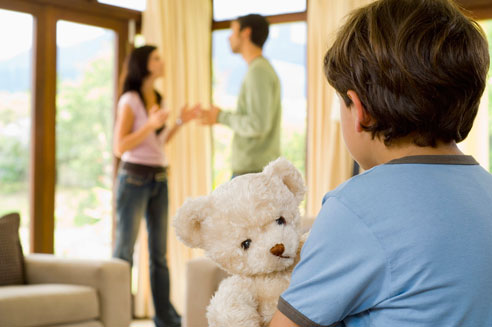
Divorced Families and the Programs That Work for Them
In 2004, most people in the United States had married only once, with 58 percent of women and 54 percent…
SELF-CONFRONTATION
where we examine our own behaviours and attitudes to make a change we may need to make. By doing this…
SELF-MONITORING
1. Used in behavioural management where a person will keep a record of behaviour patterns. 2. A personality trait for…
SENSORY PRECONDITIONING
It is a form of Pavlovian conditioning by pairing 2 neutral stimuli as well as pairing one of those stimuli…
SINGLE-EPISODE DEPRESSION
Single episode depression is an episode where a person not with a history of depressive episodes has one. Treatment is…
SOCIAL CONTROL
1. The power of organisations, institutions and the laws of society to influence and regulate behaviour. 2. The impact of…
SOCIAL NORMS
These norms prescribe the appropriate way to respond in social situations but also that which should be avoided. They apply…
SOCIOCULTURAL FACTORS
These are the environmental conditions that play a part in adaptive and healthy behaviour and wellbeing or just the opposite.…
SPREADING DEPRESSION
a wave of silence seen in neural activity that is accompanied by a relatively large negative electric potential. It can…
STIMULUS EQUIVALENCE
Is the situation when there are two stimuli which both elicit the same response. Stimuli meet the mathematical definition of…
SUBJECTIVITY
It is the ability of interpreting the data or to make judgment by using the experience, beliefs and feeling. It…
SUPERIOR OBLIQUE
eye muscle located next to the nose, that enables abduction, depression and internal rotation of the eye. This muscle is…
SELF-DEFEATING BEHAVIOR
a behaviour that blocks our goals because we are aggressively competitive we take too many risks. the behaviour which itself…
SELF-OBJECTIFICATION
how we achieve objective knowledge about our self and our understanding of our self.
SEQUENTIAL EFFECT
Choice-reaction tasks. It is the influence of a preceding trial on the performance of the current trail.
SITUATIONAL ANALYSIS
A method of behaviour study in a natural setting and not a laboratory. See naturalistic observation.
SOCIAL CONVENTIONS
These are the established rules, procedures and methods that are accepted as a guide for social conduct see social norms.…