
a set or series of correlated presumptions delivered at one time, with scores documented separately or mixed to produce a single score. Commonly referred to as battery of tests.

Introduction
Psychology is a broad field that uses a range of tools and techniques to analyze the way individuals think and behave. Psychological tests are a crucial component of these. A particular set of these assessments, referred to as a "test battery," offers thorough insight into an individual's psychological functioning. This article will examine the significance, definition, background, key ideas, and real-world uses of test batteries in psychology.
Definition
A test battery, as used in psychology, is a collection of assessments used collectively to assess various facets of an individual's psychological functioning. These exams are chosen and arranged to offer a thorough assessment of the person's mental prowess, character traits, emotional regulation, or other psychological features.
Background and Context
Historical Perspective
With the advent of intelligence testing in the early 20th century, the idea of a test battery in psychology was born. The Binet-Simon Scale was developed by pioneers Alfred Binet and Theodore Simon to assess children's intellectual capacity. One of the earliest test batteries, this scale was later modified by Lewis Terman into the Stanford-Binet Intelligence Scale and measures a variety of cognitive abilities, including verbal comprehension, reasoning, and memory.
During World War I and II, the need for rapid and efficient psychological assessment of military recruits led to the development of the Army Alpha and Beta tests. These were group-administered test batteries designed to evaluate verbal and non-verbal intelligence.
Different test batteries were created in the years that followed. These include cognitive test batteries like the Wechsler Adult Intelligence Scale (WAIS) and personality test batteries like the Minnesota Multiphasic Personality Inventory (MMPI).
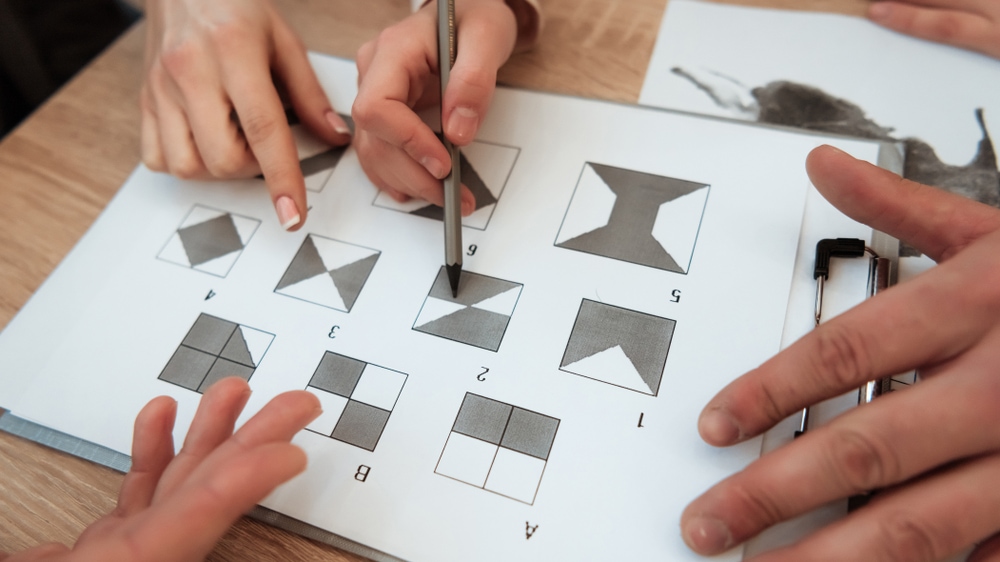
Current State of Research
The development, validation, and improvement of test batteries are the focus of current research. More trustworthy, scientifically sound, and culturally equitable test batteries are being developed by researchers. Additionally, with the introduction of computerized testing, work is still being done to develop computerized test batteries.
Additionally, researchers are looking into the usefulness of test batteries in a variety of contexts, including clinical, educational, and professional ones.
Importance
There are many reasons why test batteries are important in psychology. They enable a more thorough, comprehensive evaluation of a person's psychological functioning than a single test can, giving a more complete picture. Test batteries can evaluate a variety of skills, aptitudes, traits, and emotions, making them useful in a variety of contexts like clinical diagnosis, career counseling, educational guidance, and research.

Key Concepts and Terminologies
- Psychological Test: An objective and standardized measure of a sample of behavior.
- Intelligence Test: A type of psychological test specifically designed to measure intellectual capabilities.
- Personality Test: A questionnaire or other standardized instrument designed to reveal aspects of an individual's character or psychological makeup.
- Validity: The degree to which a test measures what it is supposed to measure.
- Reliability: The consistency of a research study or measuring test.
Practical Applications and Implications
Test batteries in psychology have several practical applications:
- Clinical Psychology: Test batteries are often used in the diagnosis and treatment planning of various psychological disorders. For instance, the MMPI is commonly used to assess personality disorders and depression.
- Educational Psychology: Test batteries can help assess learning disabilities and guide interventions. For instance, the Wechsler Intelligence Scale for Children (WISC) is used to measure a child's intellectual capabilities and identify any potential learning disabilities.
- Industrial-Organizational Psychology: In the occupational context, test batteries can help in the selection and recruitment process, identifying the candidates most likely to succeed in a given job role.
Frequently Asked Questions
What is a test battery in psychology, and why is it important?
In psychology, a test battery is a collection of tests that are given concurrently to evaluate various facets of a person's psychological functioning. It is crucial because it offers a thorough assessment, enabling more informed choices to be made regarding clinical diagnosis, educational direction, and personnel selection.
How do psychologists conduct research and gather data on test batteries?
Psychologists gather data on test batteries through administration in various contexts (e.g., clinical, educational, occupational), followed by statistical analysis to evaluate the test's reliability and validity. Research may also involve the development and validation of new test batteries.
What are the different branches of psychology that use test batteries?
Test batteries are used by many subfields of psychology, such as clinical psychology, educational psychology, and industrial-organizational psychology. Test batteries are used by each of these disciplines to evaluate various facets of psychological functioning that are pertinent to their unique contexts.
How do test batteries apply to daily life?
Test batteries can play a role in many areas of daily life. For instance, in education, they can help identify a student's strengths and weaknesses, guiding curriculum decisions. In the workplace, they can inform hiring decisions. In the clinical context, they can assist in diagnosing and treating mental health conditions.
Practical Applications and Implications
Understanding psychological test batteries and how to use them can significantly improve a variety of aspects of life. These tools have a wide range of potential applications, from improved mental health treatment planning to better educational outcomes through targeted interventions.
References
Binet, A., & Simon, T. (1916). The development of intelligence in children. Baltimore: Williams & Wilkins.
Yerkes, R. M., & Yoakum, C. S. (1920). Army mental tests. New York: H. Holt and Company.
Hathaway, S. R., & McKinley, J. C. (1943). The Minnesota Multiphasic Personality Inventory (rev. ed.). Minneapolis: University of Minnesota Press.
Wechsler, D. (1955). The measurement and appraisal of adult intelligence. Baltimore: Williams & Wilkins.












